


When we started Cledara, the goal was simple: give finance teams real control over their SaaS spend. Over time, tech companies began asking a bigger question: “If software is already one of our largest line items, why can’t we manage all of our card spend with the same platform?”
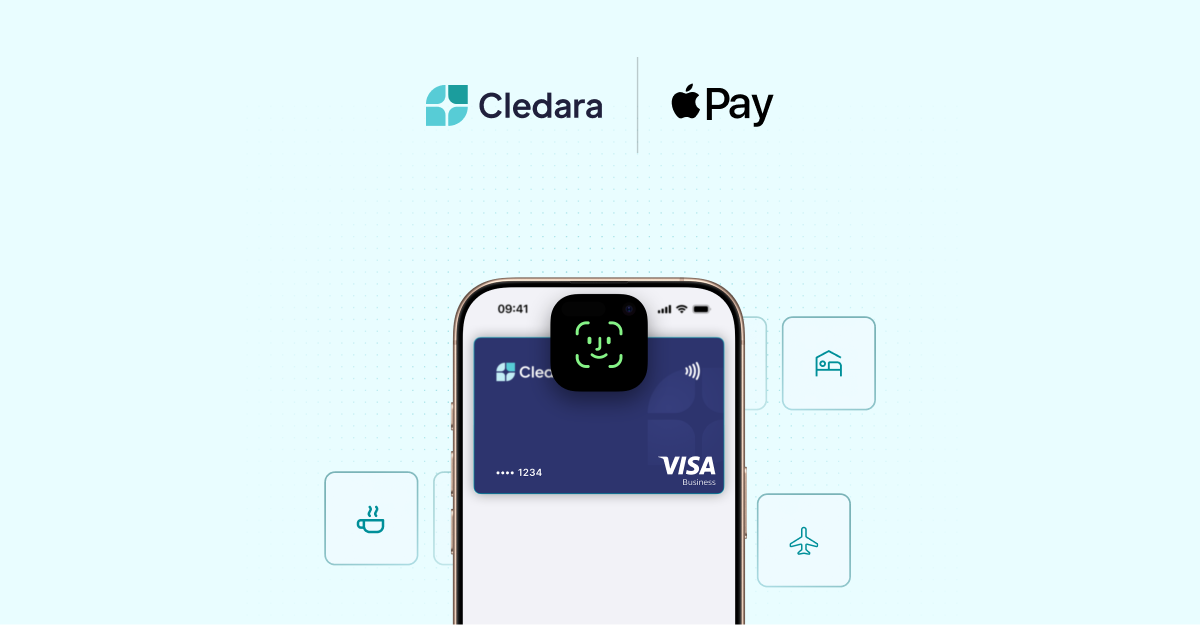
Today, we’re taking a big step in that direction: Apple Pay is now available for Cledara Spend customers across the UK and much of Europe. That means your team can tap on the go to pay with iPhone and Apple Watch, while Finance and IT keep the SaaS-first controls, renewals visibility, and risk management they already trust Cledara for.
Why finance teams are consolidating their spend stack
If you work in Finance or IT at a tech company, you’ve probably felt this:
- Too many SaaS tools, not enough visibility.
- SaaS renewals that feel like a second job. IT and ops leaders talk about SaaS renewals “slowly turning into a full-time role,” with manual tracking across spreadsheets, email and calendar reminders.
- A confusing wall of spend tools. In one tech-sales discussion, people list “a dozen” spend platforms that all do the same thing —Ramp, Brex, Navan, Airbase, Pleo, Spendesk and others—and note that many pitch the same formula: cards + expenses with slightly different branding. All of them the same. None of them built for tech companies.
At the same time, SaaS is usually the second-biggest expense after payroll for tech companies, and unmanaged waste is significant: research suggests companies in the US, UK and Europe are losing tens of thousands per year on unused or underused software.
That’s why finance leaders at tech companies are pushing to consolidate:
- One place to see every SaaS tool and every card transaction
- One system of record for budgets and approvals
- One platform both Finance and IT can live in, instead of bolting a generic card tool onto a separate SaaS management product
Cledara’s point of view: SaaS-first, everything-else too
Most spend management platforms were built from the card outwards: start with plastic and mobile wallets, then pretend to add subscription management.
Cledara comes at it from the opposite direction.
- SaaS and AI first. Cledara was built to align Finance and IT around a single, real-time view of every SaaS and AI tool, from discovery and approvals to renewals, compliance and user lifecycle.
- Proven impact on software costs. Our customers use Cledara to cut software waste and reduce SaaS costs by around 20–23% and save more than 13 hours a month on manual admin.
- Cards added on, not marked up. With Cledara Spend, you add physical and virtual cards to that same SaaS brain—at no extra cost in your existing plan, including a generous bundle of free cards.
With Apple Pay, tech companies can enjoy SaaS-first control and real world spend, all in a single platform.
Apple Pay + Cledara Spend: what’s new
1. Tap to pay, same controls
Your teams can now add their Cledara Spend cards to Apple Wallet and pay with iPhone or Apple Watch—online, in apps, and in-store wherever Apple Pay is accepted. Like any Apple Pay implementation, payments are authenticated using device-level security (Face ID, Touch ID or passcode) and tokenized card numbers, so full card details are never shared with merchants.
On top of that, all your existing Cledara Spend budgets and policies still apply:
- Per-per-card limits, adjustable in real time
- Real-time transaction data that flows into your Cledara dashboards and analytics
- Integrated receipt capture and accounting sync into tools like Xero, QuickBooks and NetSuite
2. One spend view for SaaS, travel and everything in between
Cledara already lets you see and control all SaaS subscriptions in one place, from shadow IT discovery to renewals and license optimization.
Cledara Spend extends that to:
- Travel and T&E spend
- On-the-ground purchases (office, events, ad hoc tools)
- Non-SaaS vendor payments made on card
Now, with Apple Pay, that combined view includes mobile wallet spend as well. Your dashboards don’t care whether a transaction came from a browser-based virtual card, a physical card at the terminal, or a tap from Apple Watch—it all lands in the same consolidated control plane in real time.
3. No need for a second expensive platform
The direct secret about spend tools is their hidden cost: every new platform means new implementation work, another vendor to manage, more data silos, and more training for employees.
Our view is simple:
- If 80%+ of your card spend is on SaaS and AI, it doesn’t make sense to pay high per-seat pricing for a separate generic spend tool just to manage the remaining tail.
- You’re better off with a SaaS-native platform that already understands renewals, licenses, security and vendor risk—and throws in cards, wallets and travel spend controls as part of the same package.
If you’re not yet using Cledara Spend:
- Learn more about Cledara Spend now
- Existing Cledara customers can activate Spend at no extra cost and issue physical and virtual cards for their teams.
- New to Cledara? Book a demo to see how SaaS management, spend controls and Apple Pay all come together in one platform.
What’s next
We’re continuing to invest in Cledara Spend and in the SaaS management features that made finance and IT teams choose Cledara in the first place—more coverage, deeper analytics, and even tighter alignment between software, card spend and risk.
For now, if you’re a Cledara customer in an eligible country, your iPhone can already be your Cledara Spend card.
No extra plastic. No extra platform. Just one place to manage SaaS, travel and business spend—now with Apple Pay.






.webp)

.webp)

-min%20(1).png)


