July 1, 2020
3
MIN READ

Forget Bring Your Own Device, now it's Bring Your Own Software

IT

BYOD is so 2012. 2020 is the age of BYOS. We dig into what BYOS means for companies and Software Asset Management Teams.

by
Nikesh Ashar

Bring Your Own Device (BYOD) refers to being allowed to use a personally owned device for work purposes, rather than being required to use a device, such as a phone or computer, provided by your company.

BYOD really begun taking off in 2012 and it has now exploded with 75% of smartphones used in companies being a personal device according to Gartner’s Competitive Landscape: Managed Mobility Services.

Bring Your Own Device Google Trends
Google Trend data for searches of 'Bring Your Own Device' began accelerating in 2012

The challenge of supporting BYOD for companies, Software Asset Management teams and their CIOs is well documented. Information security, access control and leaver/joiner processes are all made more challenging by people using their own devices. But the complexity of managing it has been worthwhile overall for companies. According to Ingram Micro,  69% percent of IT decision makers in the US believe BYOD is a good thing and according to ITProPortal, an employee that is able to use his or her own device works on average two hours more per day.

BYOD is just the beginning**

As more people work from home and the number of SaaS products available to them continues to explode, employees are not just bringing their own device, they’re now embracing Bring Your Own Software (BYOS).

BYOS is an emerging trend where teams and employees discover the software that they prefer to use and sign up to it using their personal or corporate credit card. In the past, IT or procurement were the all-powerful gatekeepers of software. If employees wanted access to new software, they had to put in a request and wait (hope…) for it to be approved.

The way that we do work is changing. Employees are increasingly used to working how they want, when they want, with whatever software works best for them. And with the ability to sign up for just about any SaaS with a credit card, IT and Software Asset Management teams are increasingly becoming sidelined.

Bring Your Own Software (BYOS) is here to stay**

By putting procuring software through a credit card, employees are able to use the software they want right away, without going through official software asset management or procurement processes. And because cloud software is usually accessed through a browser, the usual procedures companies take to prevent unauthorised software use like preventing the installation of new software is ineffective.

This behaviour is already happening and is widespread among companies of all sizes. In a recent survey of 200 CIOs by Broadcade, 83% had discovered unauthorised software in their companies, despite many saying that their companies had policies that prevented SaaS purchases without approval and governance.

Software Asset Management and Procurement teams and CIOs are beginning to realise that SaaS is getting out of control. A survey by the Cloud Security Alliance found that 72% of IT executives don’t know how many shadow IT applications are being used within their organisation. This isn’t a surprise. For companies with 800-1,000 people, 7-10 new SaaS products are adopted by at least one person in a company every month and more than 50% of technology spending worldwide now occurs outside of IT budgets according to IDC.

Return of the Software Asset Manager**

Just because Software Asset Management teams are being sidelined by SaaS, doesn’t mean that it’s not important. Gartner predicts that by 2020, one-third of successful cyber-attacks on enterprises will be on data located in shadow IT resources like SaaS.

This makes software asset management more important than ever. The rise of BYOS increases risk, complicates compliance with SOC2, ISO27001, GDPA and CCPA and increases overheads for companies. Traditional methods of locking down computers or detecting software doesn’t work - it’s very hard to prevent SaaS to be used in a browser and detecting unauthorised SaaS is too late because you’ve already got a reportable breach.

The challenge for Software Asset Management teams is to figure out how to embrace SaaS, capture the best of the entrepreneurial spirit of the employees across a business and come up with ways to bring Shadow IT and SaaS into the light. This means finding a way that is as easy for an employee as pulling out his or her own credit card.

The challenge is on. With 50% of IT spend undocumented, getting it right is important. Software Asset Management Teams rose to the challenge of BYOD. Now it’s time to take on BYOS. Cledara is built to help.


Contents

Contents

The software management solution for finance teams.

Learn more

Subscribe to our newsletter

Receive the latest insights in your inbox

Nikesh Ashar

I currently look after Quality Assurance and IT at Cledara. Having built a robust QA process and now a team, we work with Product and Engineering to make sure that our software is robust and well tested.

Share this post

Subscribe to our newsletter and stay informed on the latest SaaS insights

Sign up

Explore more

Hero banner for 10 things to build with the Cledara API: data squares assembling into a chart tower, calendar, and robot on deep teal

10 Things You Can Build with the Cledara API

Ten practical builds for the new Cledara API, from live spend dashboards and accounting feeds to renewal calendars, budget alerts, and AI agents.
Read more
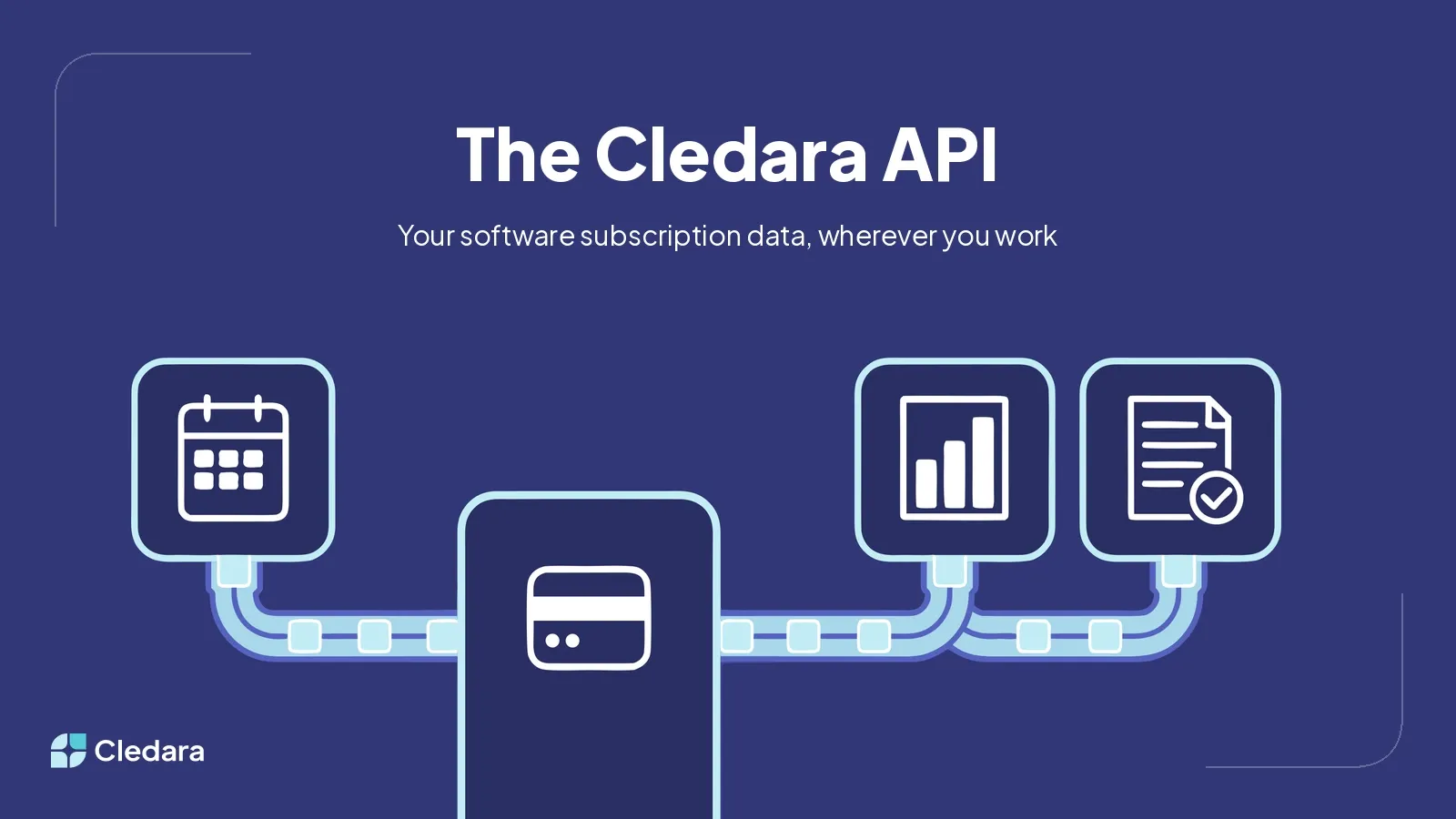
The Cledara API hero banner: subscription data flowing from a payment card tile through pipes into calendar, chart, and invoice tiles

Introducing the Cledara API: Your Software Subscription Data, Wherever You Work

Your software subscription data, available programmatically. What the new Cledara API includes, why we built it, and what customers made in the first weeks.
Read more
Stylised American flag with stripes drawn as market share bars, surrounded by software app tiles on a deep indigo background

US SaaS Market Share 2026: America Owns 75% of Software Spend

US-headquartered software vendors accounted for 74.8% of tracked SaaS market share in July 2026, up from 72.4% two years earlier. Cledara data shows UK companies send 75.1% of software spend to US vendors and only 6.9% to British ones.
Read more

Shadow AI: The Finance Leader's Guide to Managing Unsanctioned AI Spend

Shadow AI is one of the fastest-growing categories of unmanaged software spend. This guide breaks down why shadow AI is primarily a finance problem (not just a security concern) and provides a practical 4-step framework for discovering, quantifying, governing, and optimising AI spend.
Read more

How to Run a SaaS Audit in 5 Steps

A SaaS audit is the fastest way to find wasted software spend, close compliance gaps, and eliminate redundant tools. This step-by-step guide walks finance leads and IT managers through the complete process.
Read more

The True Cost of Shadow IT

Shadow IT accounts for 35-40% of total SaaS spend for most companies. Learn why it is rampant and how to combat it.
Read more

How AI Coding Tools Are Reshaping Engineering Spend

Engineering teams are spending 3x more on AI coding tools than they were 14 months ago. The data behind the developer tooling revolution.
Read more

How Cledara Uses Cledara: Key Lessons for SaaS Operations Excellence

Discover how Cledara uses its own platform, featuring insights from Nikesh, for SaaS operations excellence.
Read more

What is Application Rationalization and How to Implement It

Application rationalization helps you decide which apps to keep and which to cut for a streamlined and cost-effective tech stack. Here's how to do it.
Read more

Proving SaaS Value: How to Write a Software Business Case in 3 Steps

Your stakeholders won't invest in a new software unless you can demonstrate ROI. Here's how to build an effective business case for software in 3 steps.
Read more

Have You Secured Your Software Stack?

SaaS security is a set of practices, protocols, and processes that have the primary goal of ensuring the security of a company's SaaS environment.
Read more

What is SaaS?

Software as a Service (SaaS) is a cloud computing model that allows users to access applications over the Internet. But there's far more to it - find out here.
Read more

What is an SBOM?

Software providers must now meet SBOM requirements in order to qualify as US public sector vendors. Learn everything you need to know about SBOMs in this post.
Read more

Avoid $65m Cloud Bills with a Cloud Management Platform

Wondering if it's time to adopt a Cloud Management Platform? Here's everything you need to know before investing.
Read more

What Is Software Asset Management? [Benefits & Best Practices]

Software Asset Management helps organizations gain control and optimize software costs and usage. Learn more about its benefits and some best practices in this post.
Read more