April 12, 2023
3
MIN READ

3 Reasons Why SaaS Vendors Are Raising Prices and What You Can Do About It

SaaS Insights

Fight software price rises and stay proactive in managing your SaaS subscriptions to get the most bang for your buck.

by
Richard Gargan

As businesses increasingly rely on SaaS, they face challenges such as rising prices due to inflation, feature unbundling, and even "greenwashing." In this blog post, we'll explore these challenges and offer practical tips to help businesses optimize their SaaS subscriptions. From conducting cost-benefit analyses to negotiating with vendors and using a SaaS management platform, we'll provide insights to help you get the most value from your SaaS investments. So, let's dive in and learn how to stay savvy in managing your SaaS subscriptions.

Take control of your SaaS

Stop wasting time tracking expenses and start making informed decisions.

Learn more

1. Inflation

While inflation can be a real and significant problem for businesses and consumers alike, some vendors may use it as a way to justify price increases that are not entirely necessary. In the case of SaaS pricing, the inflation rate is currently increasing at a rate that is four times higher than market inflation alone can account for. This means that some vendors may be using inflation as a scapegoat for price increases that are driven by other factors, such as increased demand or changes in the competitive landscape.

2. Environmental Greenwashing

SaaS vendors are planning to increase their prices over the next few year, and one of the justifications they may use is the cost of their environmental sustainability programs, according to a report by Gartner. The report suggests that charging more for sustainable operations may not reflect actual costs as green data centers are designed to be more efficient, ultimately lowering costs. Gartner recommends probing vendors’ sustainability claims to detect "greenwashing." Inflation and labor costs are the other reasons cited for SaaS providers to increase prices.

3. Feature Unbundling

One way that vendors are increasing costs is through feature unbundling. Vendors are unbundling their product offering, and charging for each feature separately.  This practice can result in increased costs for users who need to access multiple features, as they may end up paying more than they would have with a bundled package. It can also make it difficult for users to compare pricing between vendors, as the unbundled features may be different across different vendors.

Evaluate the value of your SaaS subscriptions**

Before renewing or signing up for new SaaS services, conduct a cost-benefit analysis to determine if the price is worth the value it provides to your business. Consider factors such as the number of users, the features and functionalities, and the impact it has on your business operations. Use Cledara Engage to see what software your employees are actually using.

Negotiate with vendors**

If you have been using a SaaS service for a while, chances are you have built a relationship with your vendor. Don't accept a price increase without trying to negotiate with your SaaS vendor. You may be able to get a discount or other incentives, especially for larger contracts.

When negotiating, be prepared to discuss your current usage of the service, your budget, and your future plans. If your vendor is not willing to negotiate on price, consider asking for additional features or services to be included in your subscription.

Use a SaaS management platform**

Consider using a SaaS management platform to help you discover, purchase, and manage your company's software subscriptions. By identifying unused subscriptions and consolidating your subscriptions, you could save money.

Take control of your SaaS with Cledara

Take control and gain visibility over every software subscription.

Learn more

Contents

Contents

The software management solution for finance teams.

Learn more

Subscribe to our newsletter

Receive the latest insights in your inbox

Richard Gargan

Richard is Cledara's in-house Content Lead. With a background in finance, he is responsible for the analysis of SaaS data to provide readers with insightful and informative analysis to help you optimize your software spend.

Share this post

Subscribe to our newsletter and stay informed on the latest SaaS insights

Sign up

Explore more

The 15 Fastest-Growing SaaS Tools Right Now

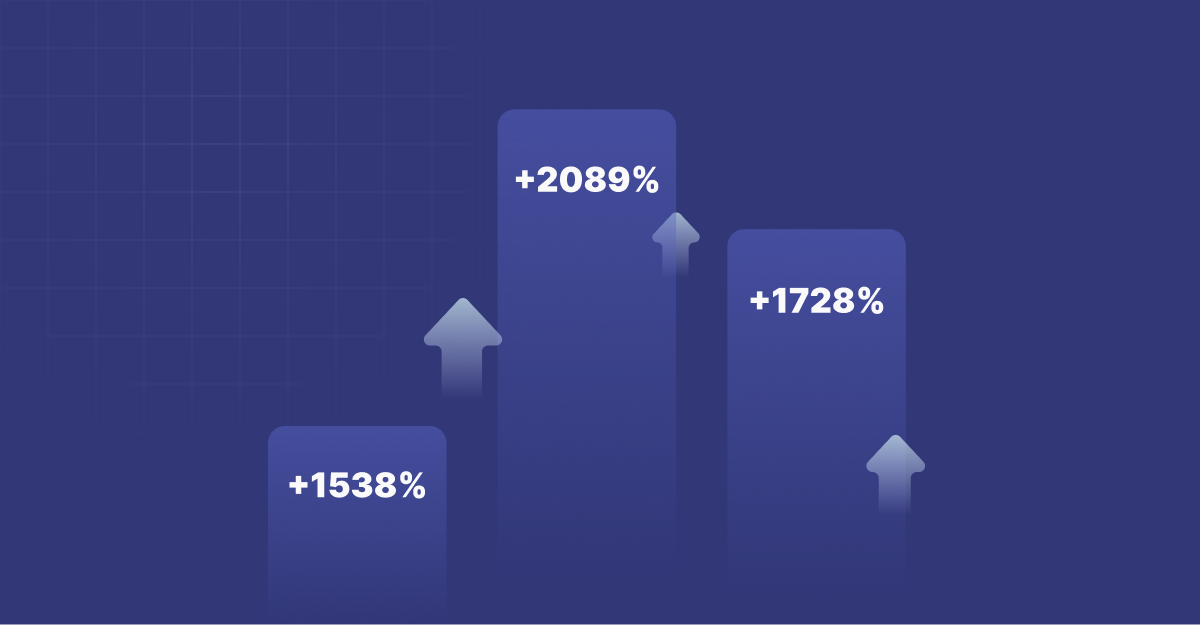
Lovable grew 2,089%. Claude grew 1,728%. Here are the 15 fastest-growing SaaS tools, ranked by real transaction growth.
Read more

How to Run a SaaS Audit in 5 Steps

A SaaS audit is the fastest way to find wasted software spend, close compliance gaps, and eliminate redundant tools. This step-by-step guide walks finance leads and IT managers through the complete process.
Read more

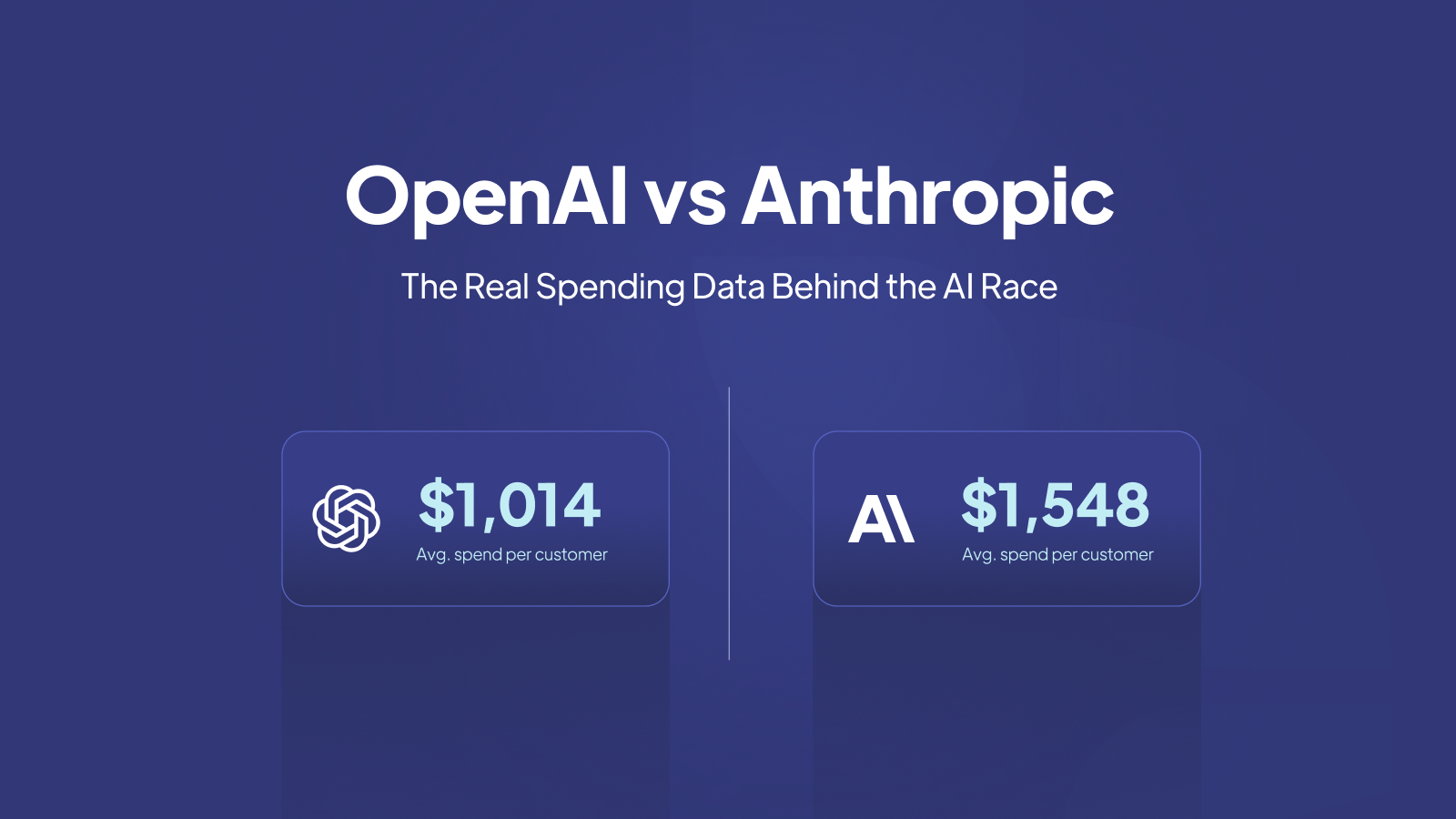
OpenAI vs Anthropic: The Real Spending Data Behind the AI Race

Cledara's transaction data reveals the moment Anthropic overtook OpenAI in enterprise spend, and what the Pentagon controversy means for how companies choose AI providers.
Read more

The True Cost of Shadow IT

Shadow IT accounts for 35-40% of total SaaS spend for most companies. Learn why it is rampant and how to combat it.
Read more

Average SaaS Spend Per Employee in 2026: The Definitive Benchmark

Based on analysis of 1.8M+ SaaS purchases across 6,800+ tools in 87 countries, we reveal the definitive benchmark for per-employee SaaS spending by region, company size, and industry. US companies average $349K annually; UK $209K; Europe $167K. Learn how company size, category mix, and AI adoption impact your per-employee costs.
Read more

The Most Expensive SaaS Tools in 2026: Real Spending Data

See real spending data from 5000+ organizations showing which SaaS tools cost the most. Salesforce leads at $240K+, but the full cost of ownership is often much higher.
Read more

Datadog vs New Relic vs Grafana: What Companies Actually Spend on Observability

Datadog costs $30,809/year on average. Here is how observability spending compares across Datadog, New Relic, and Grafana in 2026.
Read more

Why Your Company Needs SaaS Management

The median company has 25 SaaS subscriptions. The top 10% have 49 or more. Here is why every company needs SaaS management.
Read more

What Engineering Teams Actually Spend On: The Data Behind the Tools

From Datadog at $30,809/year to Cursor at $5,857, here is what engineering teams actually spend on their tools.
Read more

UK vs US vs Europe: How SaaS Spending Differs by Region

US companies spend $349K on SaaS per year on average, nearly double the UK. Here is how software purchasing patterns differ across regions.
Read more

How AI Coding Tools Are Reshaping Engineering Spend

Engineering teams are spending 3x more on AI coding tools than they were 14 months ago. The data behind the developer tooling revolution.
Read more

The 50 Most Popular SaaS Tools in 2026, Ranked by Real Purchases

The definitive ranking of the 50 most popular SaaS tools in 2026, based on real transaction data, not surveys.
Read more

AI is Eating the SaaS Budget: How AI Tools Went from 8.8% to 26.4% of All Purchases

AI tools grew from 8.8% to 26.4% of all SaaS transactions in just 14 months. Here is what the spending data reveals about the AI takeover.
Read more

2025: The Year Software Management Got Harder And How Cledara Made It Easier

What changed, what we built, and what it means for Finance teams.
Read more

SaaS Management: Why You Need It, When to Implement It, and the Disasters That Happen Without It

Learn why SaaS management matters, the triggers that force adoption, and real disaster stories—plus a practical 30/60/90-day rollout plan.
Read more