March 25, 2026
3
MIN READ

The Most Expensive SaaS Tools in 2026: Real Spending Data

SaaS Insights

See real spending data from 5000+ organizations showing which SaaS tools cost the most. Salesforce leads at $240K+, but the full cost of ownership is often much higher.

by
Stephen Boachie-Mensah

The Most Expensive SaaS Tools in 2026: Real Spending Data

Organizations are spending more on SaaS than ever. But it's not all products that are expensive, just a select few command premium pricing and get expensive customers buying them.

Using spending data from over 5000 organizations across 87 countries, we can see which tools are truly expensive, and which ones just look like they are.

Understanding 'Expensive' in SaaS

When we talk about an expensive SaaS tool, we mean two things:

1. The tool has a high price tag

2. Organizations that use it typically spend a lot on it

These can be different things. Some tools appear expensive due to their pricing page, but organizations don't actually spend that much on them. Other tools might look inexpensive on paper but organizations spend heavily. The real expense is what organizations actually pay, not what the pricing page claims.

The Most Expensive SaaS Tools in 2026

Using Cledara's spending data, here are the tools where organizations spend the most money annually:

1. Salesforce - A leading CRM with an average annual spend of $240,000+

2. SAP - The enterprise software giant averaging $220,000+ annually

3. Oracle Cloud - Database and cloud infrastructure commanding $180,000+ per year

4. Workday - HR and financial management at $160,000+ annually

5. Adobe Creative Cloud - Creative software suite averaging $95,000+ per year

6. ServiceNow - IT service management at $85,000+ annually

7. Microsoft 365 - Productivity software with $75,000+ annual spend

8. Atlassian Suite - Developer tools averaging $60,000+ annually

9. Zendesk - Customer service platform with $45,000+ yearly spend

10. Slack - Communication tool averaging $35,000+ annually

Why These Tools Cost More

The most expensive tools share common characteristics:

Enterprise Scale: They're designed for large organizations with hundreds or thousands of users, and costs scale with organization size.

Mission Critical: These are core operational tools that organizations depend on, meaning companies are willing to pay premium prices for reliability and support.

Complex Implementation: Tools like Salesforce and SAP require significant implementation, training, and ongoing support. The total cost of ownership extends far beyond the software license.

Lock-in Effect: Once implemented, switching costs are high. Organizations often continue spending because the cost of migration to alternatives exceeds the savings.

Incumbent Advantage: Many organizations are using these tools because they've always used them. They're embedded in processes, training, and organizational muscle memory.

The Hidden Expensive Tools: What's Actually Costing You

Some tools look inexpensive per user but organizations spend significantly on them because of:

Volume: Tools that seem cheap per seat multiply quickly across large numbers of users

Multiple instances: Organizations often run multiple instances for different teams or departments

Unused overages: Paying for capacity that isn't needed

Integration: Sometimes the integration with other tools costs more than the tool itself

Can You Reduce Costs for Expensive SaaS Tools?

It is a common misconception that being locked into a high-end enterprise contract means your budget is set in stone. In reality, reducing the cost of expensive SaaS tools is often more about strategic management than it is about the sticker price.

One of the most effective ways to lower your overhead is through consolidation. By moving multiple workflows onto a single platform, you eliminate redundant subscriptions and simplify your tech stack. For the tools you can’t live without, negotiation remains a powerful lever. Enterprise pricing is rarely rigid; vendors are often willing to adjust rates based on contract length or specific usage tiers. Furthermore, adopting a selective implementation strategy allows you to pay only for the high-value features your team actually uses, rather than licensing a bloated, full-suite package.

Mastering the Bottom Line

The most expensive SaaS tools are priced that way for a reason: they are enterprise-grade, mission-critical, and designed with high "lock-in" effects. However, being critical doesn't make them immune to scrutiny.

This is where proactive SaaS Management becomes indispensable. Utilizing a platform like Cledara gives you the visibility needed to make these decisions in real-time. Instead of digging through invoices at the end of the quarter, Cledara allows you to:

  • Visualize Spend: See exactly where every dollar is going across your entire organization.
  • Prevent Shadow IT: Identify unauthorized software sign-ups before they become a budgetary leak.
  • Automate Renewals: Never get caught in an expensive "auto-renew" cycle for a tool you no longer use.

Ultimately, finding genuine value is about managing your entire software portfolio to ensure every seat and every feature serves your current goals.

Which SaaS tool costs the most?

Salesforce is the most expensive, with an average annual spend of $240,000+ across organizations using it. This includes both the software license and associated implementation and support costs.

What is the total cost of ownership for expensive tools?

Total cost of ownership often exceeds the license cost by 2-5x when you include implementation, integration, training, and ongoing support. For Salesforce, a $240,000 annual spend can translate to $500,000-$800,000 in total costs.

Are enterprise tools affordable for small organizations?

Enterprise tools like Salesforce typically become very expensive for small organizations on a per-employee basis, often costing $20+ per employee annually. This is why smaller organizations often choose different, more suitable tools.

How can organizations reduce SaaS costs?

Options include consolidation of multiple tools, seat optimization by removing inactive users, negotiation with vendors, selective implementation of features, or exploring alternatives from newer market entrants that may offer better pricing.

Does expensive always mean better?

No. Expensive tools are often designed for large enterprises with specific needs. Smaller organizations may find better value and better fit with tools designed specifically for their scale and use case.

Contents

Contents

The software management solution for finance teams.

Learn more

Subscribe to our newsletter

Receive the latest insights in your inbox

Stephen Boachie-Mensah

Stephen is Cledara’s in-house Finance Manager who thrives in businesses with fast-paced growth. Stephen’s role is to provide insights to the wider business, he has been heavily involved in cross-functional projects stretching across the introduction of global benefits, financial modelling and KPI reporting procedures. Outside of work, football and American football are his favourite pastimes.

Share this post

Subscribe to our newsletter and stay informed on the latest SaaS insights

Sign up

Explore more

The 15 Fastest-Growing SaaS Tools Right Now

Lovable grew 2,089%. Claude grew 1,728%. Here are the 15 fastest-growing SaaS tools, ranked by real transaction growth.
Read more

OpenAI vs Anthropic: The Real Spending Data Behind the AI Race

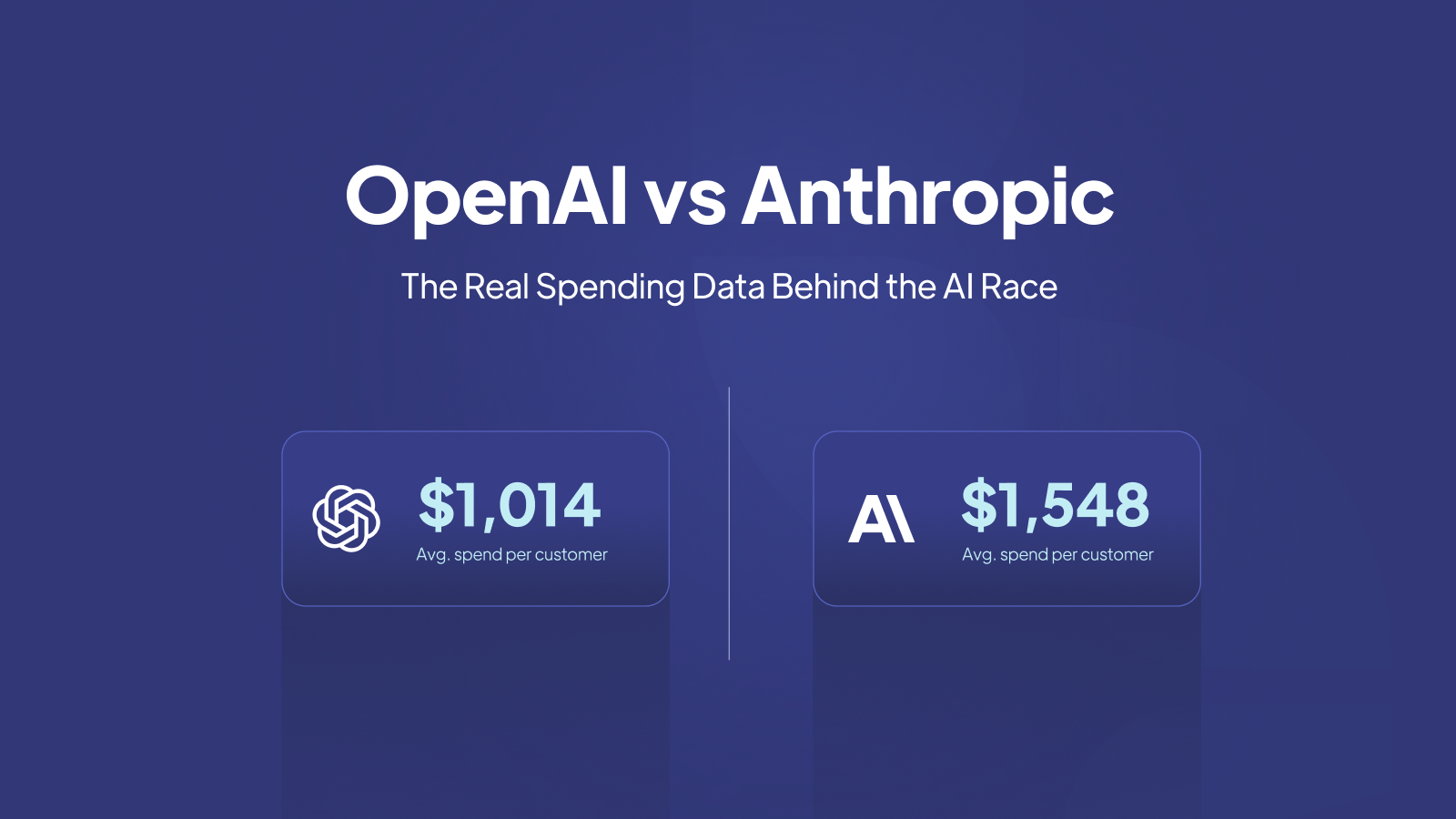
Cledara's transaction data reveals the moment Anthropic overtook OpenAI in enterprise spend, and what the Pentagon controversy means for how companies choose AI providers.
Read more

The True Cost of Shadow IT

Shadow IT accounts for 35-40% of total SaaS spend for most companies. Learn why it is rampant and how to combat it.
Read more

Average SaaS Spend Per Employee in 2026: The Definitive Benchmark

Based on analysis of 1.8M+ SaaS purchases across 6,800+ tools in 87 countries, we reveal the definitive benchmark for per-employee SaaS spending by region, company size, and industry. US companies average $349K annually; UK $209K; Europe $167K. Learn how company size, category mix, and AI adoption impact your per-employee costs.
Read more

Datadog vs New Relic vs Grafana: What Companies Actually Spend on Observability

Datadog costs $30,809/year on average. Here is how observability spending compares across Datadog, New Relic, and Grafana in 2026.
Read more

Why Your Company Needs SaaS Management

The median company has 25 SaaS subscriptions. The top 10% have 49 or more. Here is why every company needs SaaS management.
Read more

What Engineering Teams Actually Spend On: The Data Behind the Tools

From Datadog at $30,809/year to Cursor at $5,857, here is what engineering teams actually spend on their tools.
Read more

UK vs US vs Europe: How SaaS Spending Differs by Region

US companies spend $349K on SaaS per year on average, nearly double the UK. Here is how software purchasing patterns differ across regions.
Read more

How AI Coding Tools Are Reshaping Engineering Spend

Engineering teams are spending 3x more on AI coding tools than they were 14 months ago. The data behind the developer tooling revolution.
Read more

The 50 Most Popular SaaS Tools in 2026, Ranked by Real Purchases

The definitive ranking of the 50 most popular SaaS tools in 2026, based on real transaction data, not surveys.
Read more

AI is Eating the SaaS Budget: How AI Tools Went from 8.8% to 26.4% of All Purchases

AI tools grew from 8.8% to 26.4% of all SaaS transactions in just 14 months. Here is what the spending data reveals about the AI takeover.
Read more

2025: The Year Software Management Got Harder And How Cledara Made It Easier

What changed, what we built, and what it means for Finance teams.
Read more

SaaS Management: Why You Need It, When to Implement It, and the Disasters That Happen Without It

Learn why SaaS management matters, the triggers that force adoption, and real disaster stories—plus a practical 30/60/90-day rollout plan.
Read more

The effects of funding on software spend

We were curious what really happens to software spend after a company raises funding, so we dug into the data to find out.
Read more

DocuSign vs. HelloSign (now Dropbox Sign): Which Is The Better eSignature Tool?

Choosing between DocuSign and Dropbox Sign requires understanding their distinct features, pricing models, and integration capabilities to determine which eSignature solution best aligns with your business needs.
Read more